
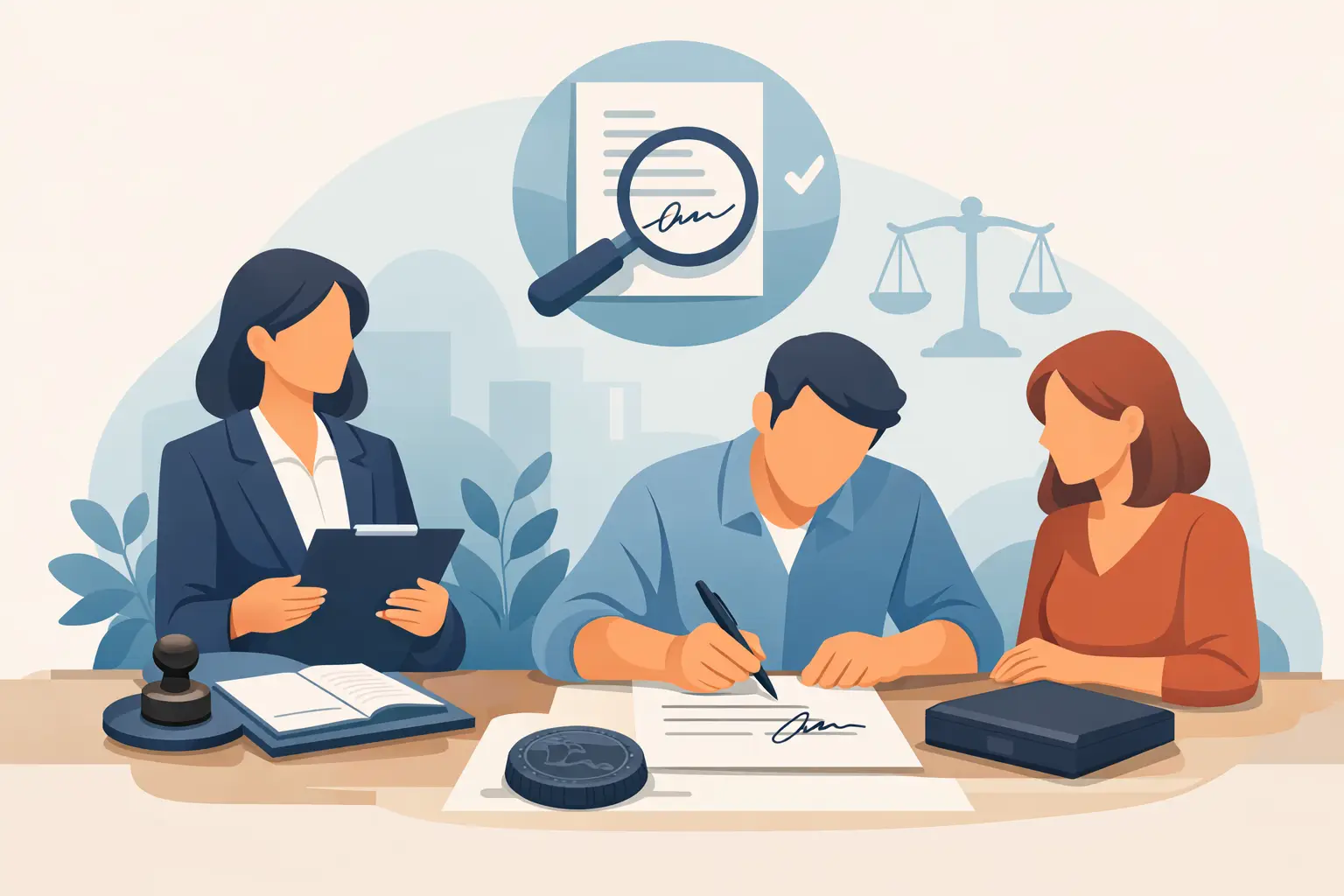
If you have been asked to sign a document for use abroad, one of the first questions is often simple: can a notary witness signatures? In many cases, yes – but the real answer depends on what the document is, where it will be used, and what the receiving authority expects. A notary does more than stand beside you while you sign. They verify identity, assess willingness and capacity, and complete a formal notarial act that gives the document weight overseas.
That distinction matters. Many people assume any witness will do, or that a solicitor and a notary perform the same role. Sometimes that causes delays, rejected paperwork, or the need to start again. If your document is going to another country, the requirements are often stricter, and the witnessing process needs to match the rules of that jurisdiction.
Can a notary witness signatures for any document?
A notary can witness signatures on many documents, but not every document should be handled in the same way. Powers of attorney, affidavits, statutory declarations, travel consent letters, company resolutions, property documents, and identity-related forms are common examples. In these situations, the notary is usually asked to confirm who signed, that the signature was made voluntarily, and that the document has been properly executed.
However, there are limits. Some documents must be signed in a particular format, in front of a specific official, or with additional formalities. Certain land documents, court forms, or registry documents may have their own rules. Some overseas authorities require a full notarial certificate, while others ask for a signature to be notarised and then legalised with an apostille. So while a notary can witness signatures in a wide range of cases, the correct question is often whether a notary is the right witness for your particular document.
What a notary is actually doing when witnessing a signature
When a notary witnesses a signature, the role is not merely ceremonial. The notary checks your identity using reliable identification documents, confirms that you understand what you are signing, and records the act in a formal way. If the document is for international use, the notary may also attach a notarial certificate and seal.
This is why notarial witnessing carries more authority than an informal witness. Foreign lawyers, banks, government offices, and consulates often rely on the notary’s certification because they may have no other way to verify the signature from abroad. The notary’s seal and signature become part of the chain of trust.
For companies, the process may also involve reviewing authority to sign. If a director is signing on behalf of a business, the notary may need supporting records such as company incorporation documents, board minutes, or a resolution. That extra checking helps ensure the document is accepted by the overseas recipient.
When notarisation is required and when it is not
Not every witnessed signature needs a notary. Some UK documents can be witnessed by an independent adult with no formal qualification at all. Others may be signed before a solicitor, commissioner for oaths, or another authorised person. The difficulty comes when the document is intended for use outside the UK, because the receiving country or organisation may insist on notarisation even if the document looks straightforward.
A travel consent for a child is a good example. One airline or border authority may accept a simple signed letter, while another may want that signature notarised. A power of attorney for use overseas may almost always require a notary, especially if it deals with property, banking, inheritance, or litigation. Business documents for cross-border transactions frequently need the same treatment.
The practical point is this: do not assume. Check what the end user requires. If there is any uncertainty, it is often safer to confirm the exact wording and formalities before signing. Signing too early can create unnecessary cost if the document has to be re-executed in the notary’s presence.
Can a notary witness signatures remotely?
In some circumstances, yes. Remote electronic notarisation has made it possible for clients to complete certain notarial acts without attending in person, which is especially useful for urgent international matters or clients based overseas. But remote witnessing is not available for every document and is not accepted in every jurisdiction.
The issue is not only whether the notary can act remotely. The more important question is whether the authority receiving the document will accept remote notarisation. Some countries, institutions, and registries are comfortable with electronic processes. Others still insist on wet-ink signatures and physical seals.
Identity checks also remain central. A remote appointment still requires careful verification, review of the document, and compliance with professional rules. If the document is time-sensitive, this route can be extremely efficient, but only where the receiving authority recognises it.
What you usually need before the signature is witnessed
A notary will usually ask to see proof of identity and proof of address. A valid passport is commonly used for identity, while a recent bank statement or utility bill may be requested for address verification. If your name has changed, you may also need supporting documents such as a marriage certificate or deed poll.
The document itself should normally be provided in final form before the appointment. If there are blanks, missing pages, or unagreed amendments, the notary may refuse to proceed until everything is complete. For company documents, additional evidence of signing authority may be required.
It is also sensible not to sign in advance unless you have been told to do so. In many cases, the notary needs to see the signature being made. If you have already signed, the notary may still be able to act by asking you to acknowledge the signature, but that depends on the document and the required notarial wording.
Common situations where a notary witnesses signatures
The need often arises in personal and commercial matters that cross borders. Individuals may need a notary to witness signatures on powers of attorney, affidavits, overseas marriage papers, parental travel consents, inheritance documents, or certified statements. Businesses often require witnessed signatures for board resolutions, banking mandates, distributorship agreements, shipping paperwork, and corporate powers of attorney.
The pattern is usually the same. A foreign authority needs assurance that the person who signed is real, identified, and properly authorised. The notary provides that assurance in a form that can be recognised outside the UK.
Where the document is going to a country that is strict about formalities, the notarial step may then be followed by apostille or consular legalisation. That does not change the witnessing function, but it does affect timing. If your matter is urgent, it helps to plan for the full process rather than the signature alone.
Why documents are sometimes rejected even after a signature is witnessed
A witnessed signature does not guarantee acceptance if the wrong procedure has been followed. Rejections often happen because the document was signed before the appointment, the name on the ID did not match the document, the notarial wording was not suitable for the receiving country, or legalisation was required but not obtained.
Sometimes the problem is more subtle. A foreign bank may want a signature witnessed by a notary and also require proof of authority for the signatory. A land registry abroad may insist on specific wording in the certificate. A consulate may want original documents rather than scans. These are not unusual problems, but they show why experience matters.
This is also where responsive service makes a real difference. If you are working to a deadline, you need clarity quickly – what must be signed, who must attend, what ID is needed, and whether apostille or legalisation will follow. A practical notarial service should help you resolve those points before the appointment, not afterwards.
Choosing the right notarial support
If you need a notary to witness signatures, the best approach is to treat the document as part of a wider process. Ask where it will be used, whether notarisation is expressly required, whether legalisation will follow, and whether the signature must be made in person or can be handled remotely. Those details shape the appointment.
For clients dealing with overseas deadlines, speed and accessibility matter just as much as legal accuracy. That is why firms such as M M Karim Notary Public London focus on urgent appointments, mobile visits, and remote options where appropriate. Convenience is useful, but only if the final document is accepted where it needs to go.
The safest answer to can a notary witness signatures is yes, often – but the value lies in making sure the witnessing is done in the right way for the country, authority, and document involved. A short check at the outset can save days of delay later, especially when the paperwork is travelling further than you are.