
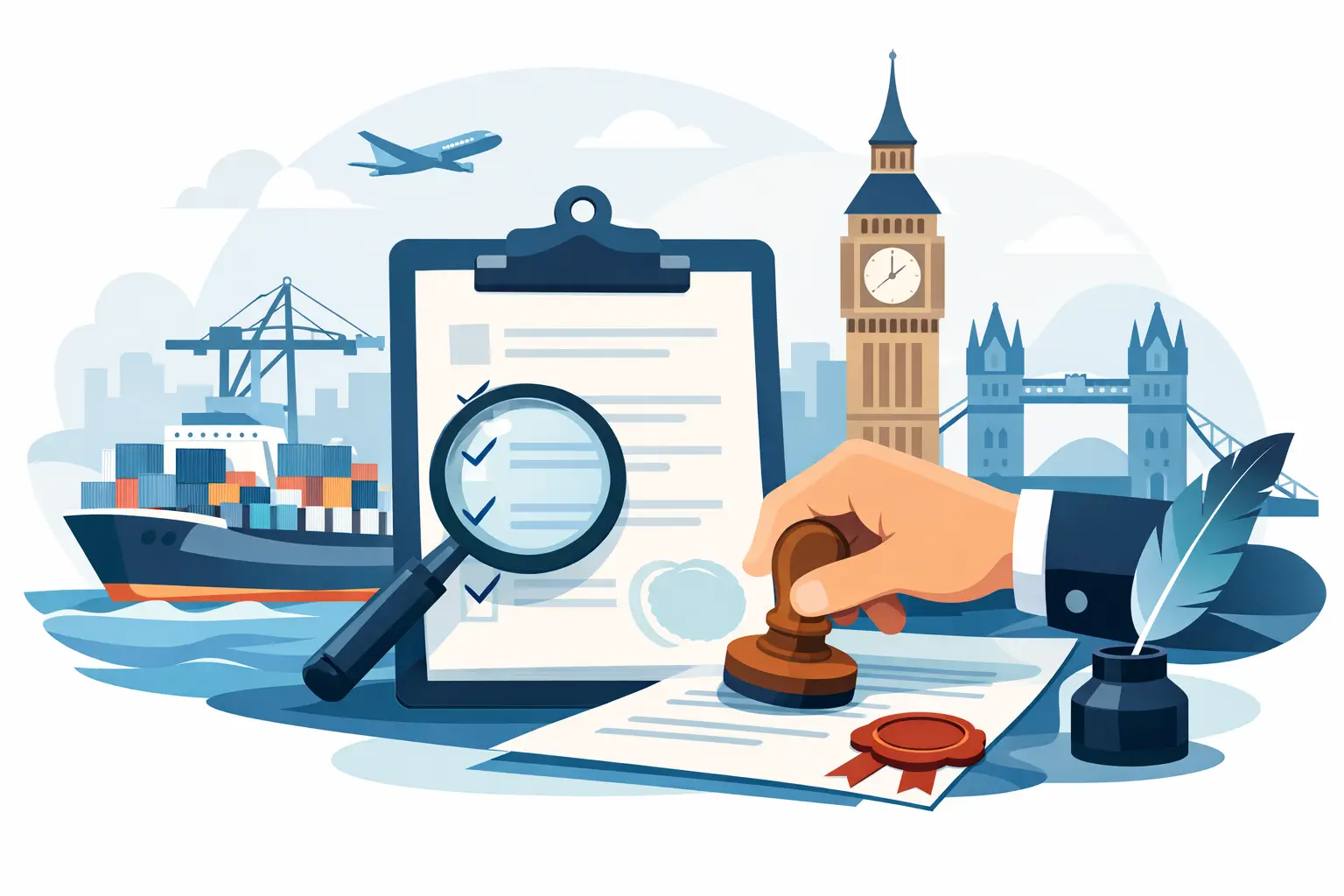
A container can be packed, booked and ready to move, yet the shipment still stalls because one document has been signed incorrectly or not notarised in the form the overseas authority expects. That is usually where shipping documents notarisation in the UK becomes urgent. For exporters, freight agents, company directors and overseas buyers, the issue is rarely just getting a stamp on paper. It is making sure the document is accepted at the other end without delay, rejection or expensive follow-up.
Shipping paperwork often sits at the intersection of private law, trade practice and foreign administrative rules. One country may ask for a notarised commercial invoice. Another may require a power of attorney, certified copy company documents, or a signed declaration to be notarised and then legalised. The right process depends on the document itself, who is signing it, and where it will be used.
When shipping documents notarisation in the UK is required
Not every shipping document needs a notary. In many transactions, standard commercial paperwork is enough. Problems tend to arise when a foreign customs authority, chamber, bank, port authority, overseas court or commercial counterparty wants independent verification of the document or the signatory.
That request may apply to commercial invoices, packing lists, certificates, powers of attorney, agency authorisations, board resolutions, declarations of origin, transport-related statements or supporting company documents. If a business is opening a trade route in a new jurisdiction, registering goods overseas, dealing with bonded cargo or appointing a local representative, notarisation is more likely to be requested.
There is also a distinction between notarising the content of a document and notarising the execution of it. Sometimes the notary is simply verifying the identity and authority of the person signing on behalf of a company. In other cases, the notary is certifying a copy of an existing corporate document or witnessing a formal declaration. The exact requirement matters because it affects what evidence must be produced.
What a notary actually checks
A proper notarial process is not a rubber-stamping exercise. The notary will usually need to confirm identity, review the document, and check that the person signing has authority to do so. For a company, that may mean seeing Companies House records, constitutional documents, board minutes, signing authorities or other evidence showing that the signatory can bind the business.
If the paperwork relates to shipping, goods movement or trade, the notary may also need to understand what the document is for and where it is going. That does not mean the notary takes responsibility for the commercial truth of every statement in the document. It means the notary must be satisfied about the legal act being carried out and the basis on which certification is being given.
This is one reason last-minute enquiries can become difficult when documents have been prepared without checking the overseas requirement first. A document may look complete from a business perspective but still be unsuitable for notarisation in its current form.
Common shipping and trade documents that may need notarisation
In practice, the most frequent requests involve supporting commercial documents rather than the entire shipping pack. A business may need a notarised power of attorney so an overseas clearing agent can act on its behalf. It may need a notarised board resolution approving a shipment-related transaction or appointing an authorised signatory. Certified copies of the certificate of incorporation, articles of association or other company records are also common where overseas banks, customs agents or regulators need proof of the company’s legal existence.
Declarations and statements can also need notarisation. For example, a manufacturer or exporter may be asked to sign a statement about goods, destination, ownership or authority. Where banks are involved in trade finance, the supporting paperwork may require a higher level of formality. In some cases, shipping-related affidavits or sworn statements are needed for disputes, insurance matters or customs issues.
The key point is that the request often comes from the overseas receiving body, not from UK law itself. That is why one shipment may need no notarial involvement at all, while the next requires notarisation and legalisation before goods can clear.
Notarisation, apostille and legalisation – the difference matters
One of the most common causes of delay is assuming notarisation is the final step. It often is not. If the receiving country requires proof that the UK notary’s signature and seal are genuine, the notarised document may also need an apostille from the Foreign, Commonwealth and Development Office. If the destination country is not covered by the Hague Apostille Convention, embassy or consular legalisation may be required after that.
For shipping documents, this extra stage is especially important because customs timelines are unforgiving. A notarised document that still lacks the required apostille may be as unusable as an unsigned one.
It also depends on the jurisdiction. Some countries accept a notary’s certification alone. Others insist on an apostille for company documents but not for every declaration. Some want originals. Others accept notarised copies. The safest approach is to confirm the exact foreign requirement before documents are signed.
What businesses should prepare before the appointment
Speed usually comes from preparation. If shipping documents notarisation in the UK is needed urgently, the business should have the final form of the document ready, together with identification for the signatory and proof of authority. For companies, this may include a passport, proof of address, company number, incorporation documents, board minutes and any existing authority granted to the person signing.
If the document refers to a shipment, sale or agency arrangement, it also helps to have the underlying commercial context available. The notary may need to understand who the parties are, what country the document is for and whether any follow-on legalisation will be needed.
Unsigned documents should usually remain unsigned until the notary advises otherwise. If a director has already signed a document intended for notarisation, that is not always fatal, but it can create extra steps. Some documents may need to be re-executed.
Why urgent cases need careful handling
Urgency is common in shipping. Vessels sail, cargo arrives, banks chase originals and overseas agents demand paperwork immediately. That said, urgent does not remove the need for legal accuracy. If the wrong signatory attends, if company evidence is missing, or if the destination country’s legalisation requirement has been misunderstood, paying for a same-day appointment will not solve the real problem.
A responsive notary service can make a substantial difference here. Flexible appointments, mobile visits and remote electronic notarisation for suitable documents can help businesses act quickly, especially where directors are travelling or based abroad. However, whether a document can be handled remotely depends on the nature of the document and the receiving jurisdiction. Some authorities remain strict about wet-ink originals.
This is where practical guidance matters more than speed alone. Fast service is useful only when the document produced is the one the foreign authority will accept.
Avoiding the mistakes that cause rejection
Most rejections follow a familiar pattern. The company sends an uncertified copy when an original certified copy was required. A manager signs when only a director had authority. The document names the wrong overseas entity. The notarial wording does not match the embassy’s expectation. Or the document is notarised correctly but never sent for apostille.
Another recurring issue is relying on a generic template downloaded online. Shipping and trade transactions often look standard until a foreign bank, customs office or counterparty requests specific wording. It is usually better to check the exact wording before execution than to try to repair the document under deadline pressure later.
For commercial clients, consistency also matters. If your business frequently exports to the same jurisdictions, putting a clear internal process in place for notarised trade documents can save time and cost over repeated transactions.
Getting the process right first time
Businesses and private clients dealing with overseas shipping formalities generally want the same thing: documents accepted without argument. That means matching the notarial act to the receiving country’s rules, preparing authority evidence properly, and allowing for apostille or embassy legalisation where required.
A specialist notary who regularly handles overseas commercial and shipping paperwork can usually identify the likely issues early and keep the process moving. Firms such as M M Karim Notary Public London work with both UK and international clients on time-sensitive documents, which is particularly useful when a transaction cannot wait for a standard appointment cycle.
If your shipment depends on paperwork being recognised abroad, the safest step is to treat notarisation as part of the transaction planning, not an afterthought. A short check at the start can prevent a much longer delay at the port.